

Pacemaker and Defibrillator Lead Extraction in London

Removing Cardiac Device Leads: A Specialist Procedure

The Complex Work That Defines a Complete Service

Removing a cardiac device lead is one of the most demanding procedures in this field. It is not common, but when it is needed it requires real expertise, and the choice of who performs it matters enormously. A truly comprehensive pacing service has to be able to offer it, performed by clinicians with specific, specialist experience. London Pacemaker Centre offers exactly that.

Why Choose London Pacemaker Centre

This is a procedure where experience is everything. Our team includes a consultant who has served as a specialist adviser to the National Institute for Health and Care Excellence (NICE) on the use of laser sheaths in lead extraction, expertise of a kind that is rare in private practice in London and across the UK. We combine that capability with careful, honest assessment, so extraction is only ever recommended when it is genuinely the right course, and is then carried out by experienced specialists in fully equipped facilities. We see both self-funded and insured patients, with care provided in London’s Harley Street medical district and at the internationally recognised Harefield Hospital in North West London.

If you have been told a lead needs to come out, it is natural to feel anxious. Our role is to explain clearly why it is being recommended, what the procedure involves, and what to expect afterwards, so the decision is one you understand and are comfortable with.

What Lead Extraction Is

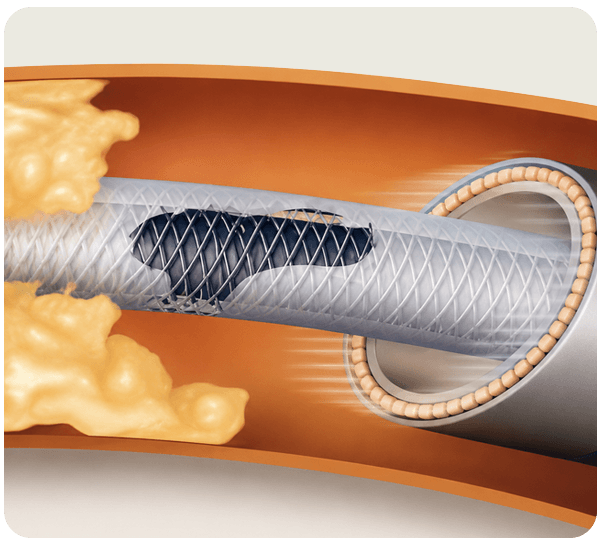
A pacemaker or defibrillator is connected to the heart by one or more thin wires called leads. Lead extraction is the procedure to remove one or more of these leads. Over time, leads become bound to the walls of the veins and heart by scar tissue, which is precisely what makes extraction a specialist undertaking. They cannot simply be pulled out. Freeing a lead safely requires specialised tools and techniques, including, in many cases, a laser sheath that gently releases the lead from the surrounding scar tissue as it is withdrawn.

Why Lead Extraction Might Be Needed

The most common reason for removing a lead is infection. Like any implanted device, from a pacemaker to a hip or knee replacement, a cardiac device can occasionally become infected. When infection takes hold around a device, the established way to clear it is usually to remove the entire system and start again, because the infection cannot reliably be cleared while the hardware remains in place. If there is any suspicion of infection involving a device, the first step is careful specialist assessment.

Less commonly, a lead may be removed because it has failed or been damaged, or to make room when a system is being changed or upgraded. Importantly, leads are not removed simply because they are old. Because extraction carries more risk than implantation, it is reserved for situations where there is a clear and necessary reason.

A Major Procedure, in Expert Hands

It is important to be straightforward about this. Whereas implanting a device is a minor procedure with very low risk, extraction is a more major one, carrying a greater risk of serious complications. That is not a reason for alarm, but it is the reason the procedure is undertaken only when needed and only by clinicians with specific expertise in it. Your consultant will discuss the reasons, the approach and the risks with you fully and honestly before any decision is made, so you understand exactly what is involved and why.

What Happens Afterwards

Where a lead has been removed and a working device is still needed, a new lead or device may be implanted, either during the same procedure or at a later stage. When the reason for extraction is infection, it is generally important to clear the infection fully before any new hardware is implanted. Your team will explain the plan that is right for your situation and support you through recovery.

Frequently Asked Questions

The most common reason is infection, where the established treatment is usually to remove the whole system so the infection can be cleared. Leads may also be removed if they have failed or been damaged, or to make room when a system is changed. They are not removed simply for being old.

Over time, leads become bound to the veins and heart by scar tissue, so they cannot simply be pulled out. Removing them safely requires specialist tools and techniques, including laser sheaths, and specific expertise.

It is a technique in which a laser sheath is passed over the lead and used to gently free it from the surrounding scar tissue as it is withdrawn. It is a specialist method used by clinicians with particular training and experience.

Yes. Unlike implanting a device, which is a minor procedure, extraction is more major and carries a greater risk of serious complications. This is why it is reserved for cases where it is genuinely needed and performed only by experienced specialists.

Often yes, if a working device is still required. A new lead or device may be implanted at the same time or later. Where infection is the reason, it is usually important to clear the infection fully first.

Speak to a Specialist

If you have been told a device lead may need to be removed, or there are concerns about an infected or faulty lead, expert assessment is essential. Contact London Pacemaker Centre to arrange a consultation with a specialist experienced in this complex procedure.