

Implantable Defibrillators (ICDs) in London: Assessment, Implantation and Care
Everything You Need to Know About Implantable Defibrillators

Why Choose London Pacemaker Centre
Because we focus entirely on this field, we can offer expertise and continuity that general cardiology rarely matches: fast access to specialist assessment, often within days, the latest device technology including subcutaneous and MRI-compatible systems, and a dedicated long-term follow-up service so your device is reviewed by someone who knows you and your history. We see both self-funded and insured patients, in modern facilities on Wimpole Street in London’s Harley Street medical district and at the internationally recognised Harefield Hospital in North West London.
We also believe these decisions are conversations, not instructions. We explain things clearly, answer honestly, and make recommendations rather than decisions, so the path you take is the right one for you.
What Is an ICD
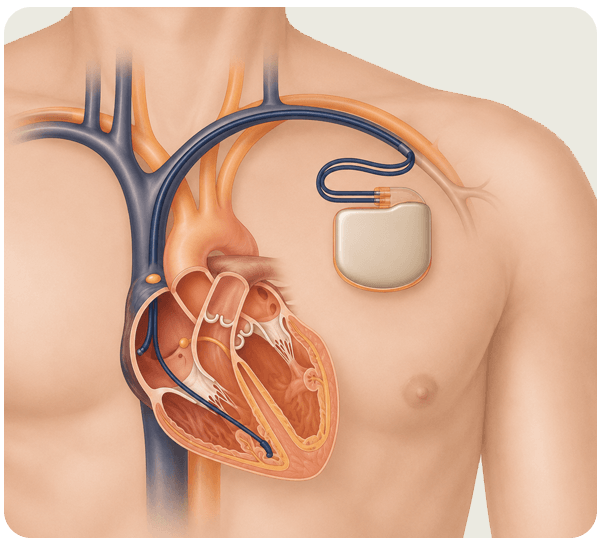
An implantable cardioverter defibrillator (ICD) is a small electronic device placed inside the body to control dangerous heart rhythms. While a pacemaker is for a heart that beats too slowly, a defibrillator is for a heart that can go dangerously fast in a way that may be life-threatening, in particular the rhythms known as ventricular tachycardia and ventricular fibrillation.
An ICD monitors your heartbeat continuously. If it detects a dangerous rhythm, it can deliver rapid pacing impulses to correct it, or, if needed, a stronger shock to reset the heart to a normal rhythm. Most of the time you will not notice it working at all. If it ever delivers a shock, it can feel like a sudden jolt or thump in the chest. ICDs are one of the most effective ways to prevent death from sudden cardiac arrest caused by dangerous arrhythmias.
ICD Assessment
Recommending a defibrillator follows careful assessment, because the device is only the right answer for specific situations. An ICD may be considered for people who have survived a cardiac arrest, who have a heart condition that increases the risk of sudden death, or who have severe heart failure or an inherited rhythm disorder.
A key part of assessment is understanding why an ICD is being considered, because this falls into two categories that shape everything that follows, including your driving restrictions afterwards. Primary prevention means you have been found to have a condition that places you at risk, but you have not yet had a dangerous event, so the device is recommended as a safeguard. Secondary prevention means you have already had an event, and the device is there to protect you from another. We explain clearly which group you fall into and what it means for you.
Assessment draws on your clinical history, an ECG, imaging and rhythm monitoring as needed, and a frank conversation about the balance of benefits and risks for your individual circumstances.
ICD Implantation
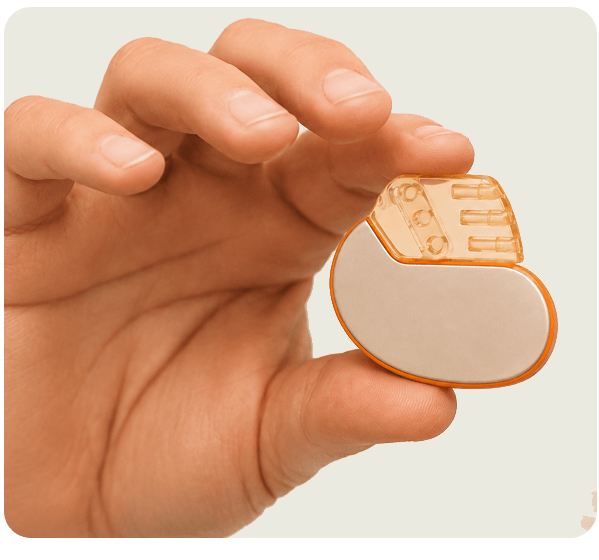
For a standard implant, having a defibrillator fitted is a short, low-risk procedure, similar in many ways to having a pacemaker.
Subcutaneous ICD (S-ICD)
A subcutaneous ICD is a different type of defibrillator that avoids placing any leads inside the heart.
Instead of threading a lead through the veins into the heart, an S-ICD uses a lead that runs under the skin of the left side of the chest and up alongside the breastbone. This is connected to the defibrillator itself, which sits under the skin on the left side of the chest, below the armpit. Because nothing is placed inside the heart or veins, the S-ICD can be an attractive option for certain patients, particularly where avoiding leads in the heart is an advantage.
It is not the right choice for everyone. Only a proportion of patients currently benefit from a subcutaneous rather than a transvenous device, in part because an S-ICD is designed to deliver shocks but does not provide the longer-term pacing functions that some patients need. Your consultant will discuss the merits of each option for your situation and recommend the one that fits your needs.
ICD Revision
Like all implantable devices, a defibrillator does not last indefinitely, and occasionally the system needs attention rather than just routine monitoring.

Frequently Asked Questions
ICD Assessment
ICD Implantation
Subcutaneous ICD (S-ICD)
ICD Revision
Living With an ICD
Book an Appointment
Whether you are being assessed for a defibrillator, considering a subcutaneous device, or due a generator change, London Pacemaker Centre offers expert, specialist care from first assessment through to long-term follow-up. Contact us to arrange a consultation or make a referral, and our team will ensure you receive prompt, expert and personalised care.